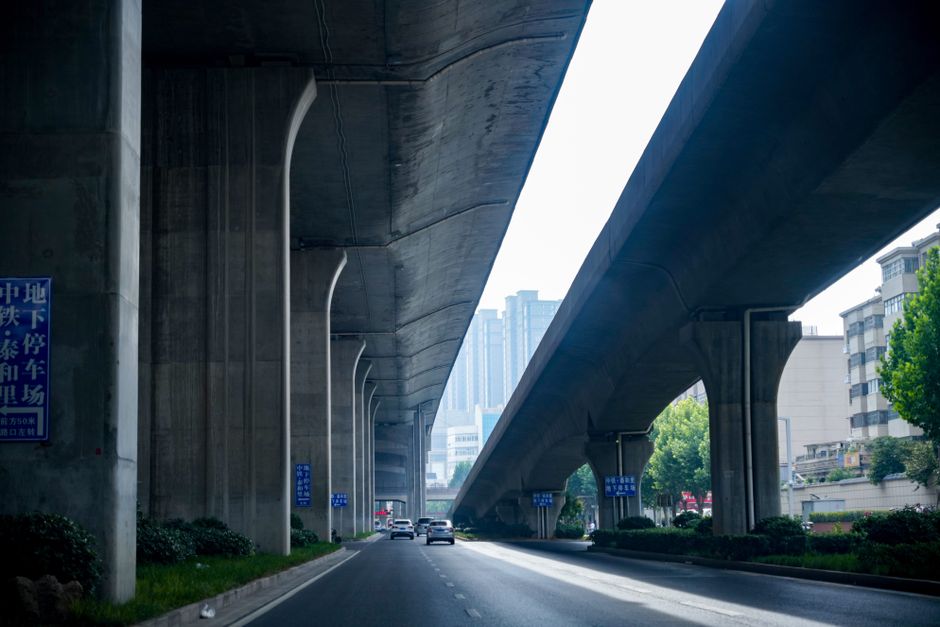


Chuzhou Infrastructure Update: Transportation Expansion Reshapes Business Landscape
Chuzhou (滁州, Chúzhōu) has launched a comprehensive transportation expansion program with a total investment of RMB 42.8 billion (approximately US$5.9 billion), targeting rail, expressway, and port upgrades that directly impact foreign-invested enterprises operating in the city. The program, announced in Q1 2025 and scheduled for phased completion by 2028, is expected to reduce average logistics costs for manufacturers by 18% while cutting passenger transit time to Nanjing from 90 minutes to just 30 minutes via the new intercity railway. For foreign companies establishing or expanding 外商独资企业 (WFOE, wàishāng dúzī qǐyè) in the region, these infrastructure changes fundamentally alter site selection, supply chain planning, and workforce accessibility.
Rail Integration with Nanjing: The S4 Line Breakthrough
The centerpiece of the expansion is the Chuzhou-Nanjing Intercity Railway (Line S4), a 46.6-kilometer electrified line that connects Chuzhou’s downtown to Nanjing’s江北新区 (Jiangbei New Area, Jiāngběi Xīnqū). The line, which began trial operations in late 2024 and achieved full commercial service in March 2025, cuts the previous 90-minute road journey to a reliable 30-minute rail commute. With trains running every 8 minutes during peak hours and a maximum speed of 140 km/h, the S4 line effectively integrates Chuzhou into Nanjing’s metropolitan transit network, giving foreign executives based in Nanjing direct daily access to Chuzhou’s manufacturing zones.
Business implication: For companies operating 中外合资企业 (equity joint ventures, zhōngwài hézī qǐyè) in Chuzhou’s economic development zones, the S4 line enables a “Nanjing office, Chuzhou factory” model. Foreign managers can now live in Nanjing—where international schools and premium housing are abundant—and commute to Chuzhou facilities in under 40 minutes door-to-door. This reduces the need for costly expatriate relocation packages to Chuzhou and improves talent retention. Data from the Chuzhou Municipal Bureau of Commerce shows that 12 foreign-invested companies have already relocated their regional headquarters from Shanghai to Nanjing specifically to leverage this rail connection, keeping production in Chuzhou while gaining better access to talent and services.
The S4 line also connects directly to Nanjing Metro Line 3 and Line S8, providing seamless access to Nanjing Lukou International Airport and the Nanjing South Railway Station high-speed hub. This multimodal integration reduces total door-to-door travel time from Chuzhou factories to Shanghai Pudong Airport from 4.5 hours to approximately 2.5 hours.
Expressway Network Expansion: Connecting Industrial Clusters
Complementing the rail investment, Chuzhou is expanding its expressway network with three major projects totaling RMB 18.6 billion. The Chuzhou Outer Ring Expressway (Phase II) adds 62 kilometers of four-lane highway that encircles the city’s primary industrial zones, including the Chuzhou Economic and Technological Development Zone and the Suzhou-Chuzhou Modern Industrial Park. Completion is scheduled for Q4 2026.
The G40 Expressway Chuzhou Section widening project expands the existing six-lane corridor to eight lanes over 38 kilometers, directly connecting the Chuzhou Port area to the Hefei-Nanjing Expressway corridor. This project, budgeted at RMB 4.2 billion, aims to eliminate the chronic congestion that has plagued freight movement between Chuzhou’s Yangtze River port facilities and inland industrial parks. Early data from pilot sections completed in late 2024 show a 22% reduction in average truck transit time during peak hours.
A third project, the Chuzhou-Nanjing Second Expressway (57 kilometers), will provide a dedicated freight corridor bypassing congested urban sections of the existing route. This RMB 6.8 billion project, now in land acquisition phase, is expected to serve the growing volume of cross-provincial logistics driven by the 12 new industrial parks established along the transit corridor since 2021. According to the Anhui Provincial Department of Transport, freight volume between Chuzhou and Nanjing has grown 85% since 2021, reaching 47 million tons annually.
Port and Logistics Upgrades: Yangtze River Access
Chuzhou Port, located on the northern bank of the Yangtze River, is undergoing a RMB 6.4 billion upgrade that will increase its container handling capacity from 180,000 TEUs (twenty-foot equivalent units) to 350,000 TEUs by 2027. The expansion includes two new 10,000-ton-class berths, automated container stacking systems, and a dedicated rail- intermodal terminal that connects directly to the S4 line freight corridor.
This upgrade is critical for foreign manufacturers that rely on Yangtze River shipping for export or domestic distribution. For example, a German automotive parts supplier operating a WFOE in Chuzhou’s Suzhou Industrial Park reported that port congestion in 2023 added an average of 3.5 days to export lead times. The expansion is projected to reduce this to under 1.5 days, with customs clearance integrated directly at the port facility through a new single-window electronic system.
The logistics park adjacent to the port, covering 1.2 square kilometers, is being expanded to include 150,000 square meters of bonded warehousing and cold storage facilities. These additions support industries such as food processing, pharmaceuticals, and electronics that require temperature-controlled supply chains. The bonded warehouse designation allows foreign companies to defer customs duties on imported raw materials until goods leave the facility for domestic sale, improving cash flow for enterprises operating under 加工贸易 (processing trade, jiāgōng màoyì) arrangements.
Business Impact: What Foreign Enterprises Need to Know
The combined effect of these infrastructure investments is a fundamental shift in Chuzhou’s attractiveness as a manufacturing and logistics base. Companies that previously ruled out Chuzhou due to transportation bottlenecks are now reconsidering. The Chuzhou Investment Promotion Bureau reports that 150+ foreign companies have expanded operations in the city since 2021, including 34 new WFOE registrations in 2024 alone—a 40% increase over 2020. Key sectors driving this growth are automotive components, new energy equipment, electronics assembly, and advanced materials processing.
However, the infrastructure expansion also introduces new complexities. Land prices in areas directly served by the S4 line stations have risen 35% since construction began, squeezing margins for companies that delayed site selection. Meanwhile, the expressway expansion has prompted the relocation of 12 industrial enterprises currently occupying land needed for road construction, with compensation packages averaging RMB 14 million per relocated facility.
For foreign investors evaluating Chuzhou, the timing of their entry matters significantly. The table below summarizes transit improvements and their business implications:
| Route/Corridor | Before Expansion | After Expansion | Travel Time Reduction | Primary Business Benefit |
|---|---|---|---|---|
| Chuzhou downtown to Nanjing downtown | 90 min (road) | 30 min (S4 rail) | 67% | Executive commuting; talent access |
| Chuzhou Port to Hefei industrial corridor | 2.5 hr (truck) | 1.8 hr (G40 widened) | 28% | Freight cost reduction |
| Chuzhou Port to Shanghai Port | 6 hr (truck + barge) | 4.5 hr (optimized route) | 25% | Export logistics efficiency |
| Chuzhou factory to Nanjing Lukou Airport | 2.0 hr (road) | 1.2 hr (rail + metro) | 40% | Business travel; sample shipments |
Decision framework for foreign investors: If your company relies on frequent cross-provincial freight movement (>50 truck shipments per month), choose a site within 5 km of the G40 expressway corridor to maximize logistics savings. If your company depends on expatriate talent or requires frequent executive travel to Nanjing, prioritize sites within 3 km of any S4 line station to reduce commuting costs and improve retention. If your company handles large volumes of Yangtze River barge freight (>1,000 containers per year), prioritize the Chuzhou Port logistics park to gain bonded warehouse benefits and reduced lead times.
NEXT STEPS
- Evaluate site options along the S4 corridor: Use our Chuzhou Industrial Park Comparison Guide to assess land costs, transport access, and incentive packages at stations along the rail line before prices escalate further.
- Review logistics cost models: Download the China Freight Cost Calculator to model your company’s specific shipping patterns against the improved port and expressway routes and quantify savings.
- Schedule a site inspection with local authorities: Contact the Chuzhou Investment Promotion Bureau through our Government Door-Knocking Service to arrange a customized tour of transit-adjacent industrial parks and meet with zone officials in person.
— Anhui Gateway —
Remote China market entry support, built around execution.