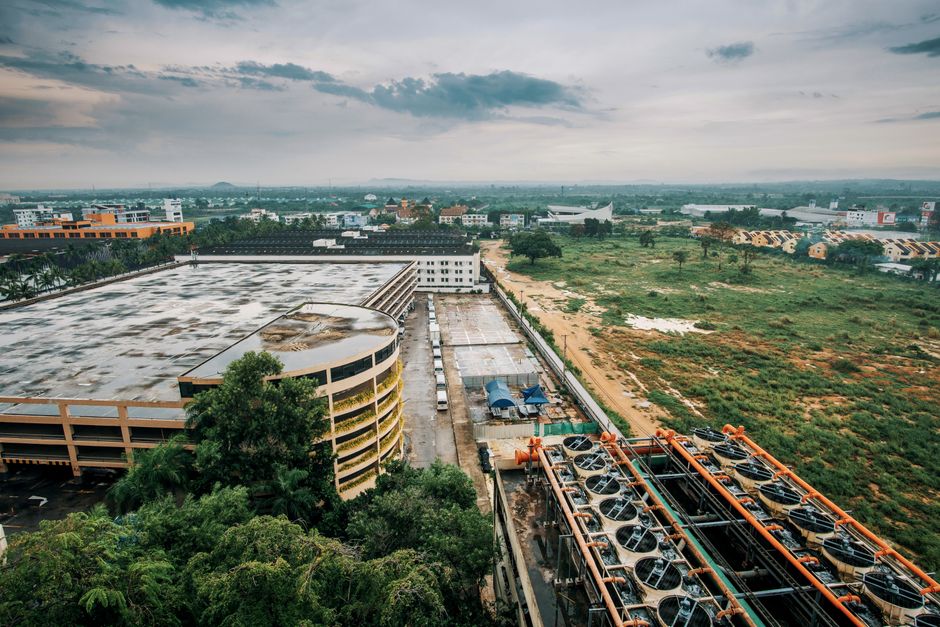


Wuhu Industrial Parks Review: Infrastructure, Costs, and Access
Wuhu, a core industrial hub in Anhui Province, currently operates 18 designated industrial parks, including 3 national-level development zones. These zones collectively host over 2,800 foreign-invested enterprises (外商投资企业, wàishāng tóuzī qǐyè) and have attracted cumulative foreign direct investment exceeding USD 12 billion since 2010. For foreign executives evaluating central China locations, Wuhu’s parks present a compelling mix of infrastructure maturity and competitive operating costs that are 20-30% below Shanghai’s suburban industrial parks.
Infrastructure Across Wuhu’s Tiered Parks
Wuhu’s industrial parks are stratified across three tiers: national-level economic zones, provincial-level development zones, and specialized industrial clusters. The most mature is the Wuhu Economic and Technological Development Zone (芜湖经济技术开发区, Wúhú jīngjì jìshù kāifā qū), established in 1993, which covers 56 square kilometers and specializes in automotive, electronics, and materials manufacturing. This zone delivers 99.97% power reliability with dual-substation redundancy, critical for continuous manufacturing processes.
The Wuhu High-Tech Industrial Development Zone (芜湖高新技术产业开发区, Wúhú gāoxīn jìshù chǎnyè kāifā qū), upgraded to national-level status in 2015, focuses on R&D-intensive sectors including robotics, new energy, and biomedical devices. This park offers dedicated fiber-optic backbone connectivity and shared laboratory facilities for startups. Provincial parks like the Yijiang Economic Development Zone (弋江经济开发区, Yìjiāng jīngjì kāifā qū) provide more affordable entry options but may lack the same power redundancy and logistics infrastructure.
Water treatment capacity across Wuhu’s parks exceeds 1.8 million tons per day, with industrial wastewater treatment plants operating at 92% capacity utilization. The municipal government invested 4.2 billion RMB between 2020-2024 to upgrade drainage and treatment facilities across all 18 parks, reducing flood risk for low-lying zones near the Yangtze River.
Cost Landscape: Land, Leasing, and Labor
Land costs in Wuhu’s industrial parks range from 380 RMB per square meter in the main economic zone to as low as 220 RMB per square meter in peripheral provincial parks. This represents a 40-50% discount compared to comparable parks in the Yangtze River Delta core cities like Suzhou or Wuxi. Factory lease rates average 25-35 RMB per square meter per month for standard single-story buildings, and 18-25 RMB for multi-story units, with lease terms typically structured for 5-10 years with annual rent escalation clauses of 3-5%.
| Cost Item | Wuhu ETDZ | Wuhu High-Tech Zone | Yijiang Zone | Shanghai Suburban Park |
|---|---|---|---|---|
| Industrial land (RMB/sqm) | 380 | 420 | 220 | 750 |
| Std. factory lease (RMB/sqm/mo) | 30-35 | 28-33 | 18-22 | 50-65 |
| Skilled labor (RMB/month) | 5,500-6,500 | 6,000-7,500 | 4,800-5,500 | 8,500-10,500 |
| Industrial power (RMB/kWh) | 0.68 | 0.72 | 0.62 | 0.85 |
| Water (RMB/ton) | 3.2 | 3.5 | 2.8 | 4.5 |
Labor costs in Wuhu parks remain a key advantage for foreign investors. The average monthly wage for production line workers is 4,500-5,500 RMB, while mid-level engineers cost 8,000-12,000 RMB per month. Social insurance contributions (五险一金, wǔxiǎn yījīn) add approximately 32-38% on top of base salary, slightly below the national average. The city’s six vocational colleges graduate over 15,000 technical students annually, providing a steady talent pipeline for manufacturing operations.
Access to Markets: Rail, Road, and River
Wuhu’s logistics infrastructure centers on its Yangtze River port, which handled 135 million tons of cargo in 2023, ranking it among the top 15 inland river ports nationally. The Wuhu Port (芜湖港, Wúhú Gǎng) connects directly to Shanghai’s deep-water terminals, with container barge transit times of 18-24 hours. Five major expressways link the city to the national highway network, providing 3-hour trucking access to Shanghai and Nanjing’s international airports.
Rail freight connections serve the parks through the Wuhu Railway Hub, part of the Anhui-Jiangxi railway corridor. Three dedicated freight yards handle containerized cargo with daily departures to Shanghai, Guangzhou, and Beijing. The recently completed Wuhu-Yangzhou railway shortcut has reduced transit times to northern Jiangsu provinces by 2.5 hours since its opening in 2022. For time-sensitive shipments, Wuhu Xuanzhou Airport offers 12 domestic cargo routes, with a new cargo terminal completed in March 2024 that doubles air freight capacity to 80,000 tons per year.
Decision Framework: Park Selection Matrix
Choosing the right park in Wuhu depends on your industry profile, operational requirements, and budget constraints. Use this framework to narrow your options:
If your operation involves heavy manufacturing with high electricity demands (above 5 MW) and river port access, choose the Wuhu Economic and Technological Development Zone. Its power infrastructure and direct port proximity support steel processing, automotive assembly, and chemical intermediates.
If your business is in electronics assembly, robotics, or R&D-intensive sectors requiring skilled technicians and university partnerships, choose the Wuhu High-Tech Industrial Development Zone. The zone co-locates with Wuhu University’s engineering labs and offers tax incentives for qualified technology enterprises.
If your primary concern is cost minimization for labor-intensive assembly or warehousing operations, choose a provincial-level park like Yijiang Economic Development Zone. Land and labor costs here are 25-40% lower than the national-level zones, though logistics infrastructure and power redundancy may be less robust.
If you plan to serve the domestic consumer market in central and western China, choose a park near the Wuhu Railway freight hub or expressway interchanges. Parks in the northern suburbs offer direct access to the G5011 expressway corridor connecting to Zhengzhou, Wuhan, and Xi’an, markets representing 420 million consumers within a 600 km radius.
Common Pitfalls for Foreign Investors
NEXT STEPS
- Conduct a virtual park tour: Contact the Wuhu Investment Promotion Bureau for a customized virtual tour of 3-4 parks that match your industry. Use our Wuhu Park Selection Tool to pre-screen options based on your logistics, utility, and labor requirements.
- Benchmark operating costs: Request a detailed cost projection comparing your shortlisted parks. Reference our Anhui Industrial Park Cost Report 2024 for validation data on land, leasing, and labor across provincial benchmarks.
- Schedule a site visit with local support: Plan a 3-day trip to inspect facilities in person, meet with zone management authorities, and interview current foreign tenants. Our China Site Visit Checklist provides a structured evaluation framework for each park you tour.
— Anhui Gateway —
Remote China market entry support, built around execution.