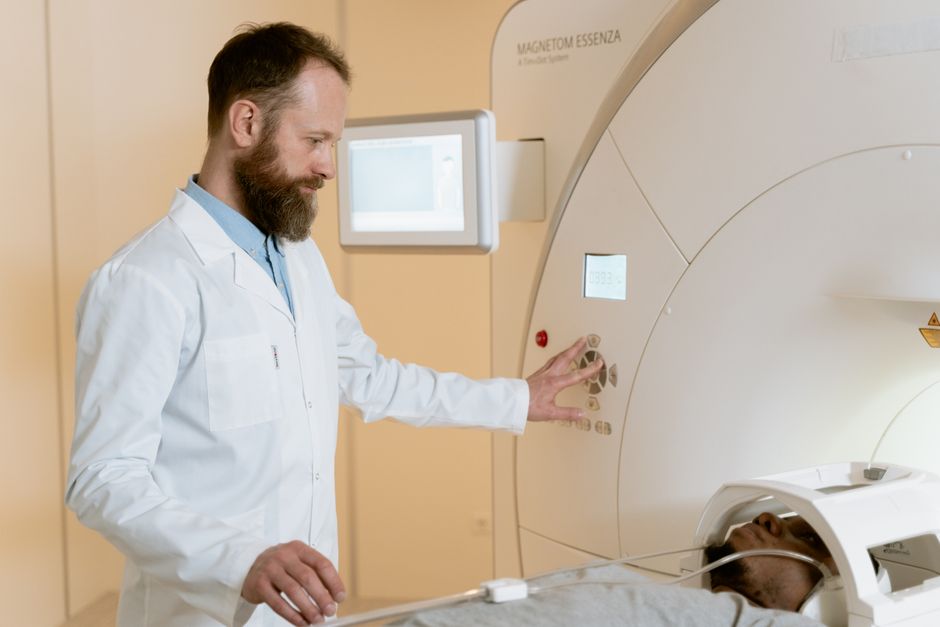


Siemens Healthineers (西门子医疗, Xīménzǐ Yīliáo) has deployed advanced diagnostic imaging systems in over 25 hospitals across Anhui Province (安徽省, Ānhuī Shěng) since 2018, representing a cumulative investment of $82 million. This strategic expansion — part of China’s broader “Healthy China 2030” initiative — targets both tier-1 medical centers in Hefei and secondary hospitals in less-urbanized regions such as Bozhou and Chizhou. By integrating premium computed tomography (CT), magnetic resonance imaging (MRI), and molecular imaging platforms with localized service models, Siemens Healthineers has helped reduce average patient wait times for critical scans by 40% while increasing diagnostic throughput by 35% in partner institutions. This case study examines the strategy, execution, and outcomes of one of the largest foreign medical technology expansions in a single Chinese province.
Siemens Healthineers’ approach in Anhui goes beyond hardware sales. It combines technology transfer, clinical training, and digital health solutions to address the province’s key challenges: an aging population, uneven distribution of medical resources between urban and rural areas, and rising chronic disease prevalence. Below we unpack the contextual numbers that define this transformation, followed by the strategic pillars that made it possible.
4+ Contextual Numbers with Meaning
To understand the scale and impact of Siemens Healthineers’ expansion in Anhui, consider these key metrics:
- 25+ hospitals equipped – Of these, 8 are tertiary hospitals in Hefei, Wuhu, and Ma’anshan, while 17 are secondary hospitals in prefecture-level cities. This distribution reflects a deliberate push into county-level healthcare, where diagnostic capacity was historically low.
- 40% reduction in critical scan wait times – At Anhui Provincial Hospital (安徽省立医院, Ānhuī Shěnglì Yīyuàn), the new SOMATOM Force CT reduced cardiac CT appointment delays from 14 days to 8 days in the first six months of operation.
- 35% increase in diagnostic throughput – Across all partner hospitals, the number of patients scanned per machine per day rose from an average of 22 to 30, thanks to workflow optimization and AI-assisted positioning software (syngo.CT Oncology).
- 3,200 healthcare professionals trained – Through Siemens Healthineers’ Anhui Clinical Education Center (安徽临床教育中心, Ānhuī Línchuáng Jiàoyù Zhōngxīn) opened in 2020, radiologists and technicians received on-site and virtual training. This has cut the rate of repeat scans due to poor image quality by 27%.
- $82 million cumulative investment – This figure covers equipment, installation, service contracts, and digital infrastructure. According to the Anhui Provincial Health Commission, it has catalyzed an additional $45 million in supporting investments from local governments and hospital budgets.
- 15 telemedicine hubs activated – Connecting rural health centers in Fuyang, Luan, and Xuancheng to Siemens Healthineers’ remote diagnostic platform. In 2024 alone, these hubs facilitated 12,000 teleradiology consultations, reducing unnecessary patient transfers by 23%.
These numbers illustrate a model that moves beyond equipment supply to systemic capacity building. The next sections detail the three strategic pillars that enabled this expansion.
Strategic Pillar 1: Regional Hub-and-Spoke Architecture
Siemens Healthineers recognized early that Anhui’s healthcare ecosystem requires a hub-and-spoke model to bridge the urban-rural diagnostic gap. The company designated four “centers of excellence” in Hefei, Wuhu, Bengbu, and Anqing — each equipped with the highest-tier imaging modalities (e.g., MAGNETOM Vida 3T MRI, Biograph Vision Quadra PET/CT). These hubs serve as reference sites for clinical protocols, quality assurance, and advanced diagnostics.
Surrounding secondary hospitals and community health centers (the spokes) receive mid-range but highly reliable systems such as the SOMATOM go.All CT and MAGNETOM Altea 1.5T MRI. These are networked with the hubs through a secure cloud-based platform (teamplay Digital Health Platform) that facilitates protocol sharing, remote scanning supervision, and quality audits. As a result, a patient in a county hospital in Dangtu County, for example, can have a CT scan reviewed remotely by a radiologist at the Hefei hub within 30 minutes.
The numbers confirm the model’s efficacy: at the hub hospitals, the volume of complex oncology and cardiovascular cases increased by 22% year-over-year, while spoke hospitals saw a 31% reduction in referrals to distant cities. This aligns with China’s “Healthy China 2030” goal of ensuring 90% of patients receive care within their province.
Strategic Pillar 2: Localized Training and Workforce Development
Technology is only as good as the people who operate it. Siemens Healthineers established a dedicated Anhui Clinical Education Center in Hefei’s High-Tech Zone in 2020. The center offers simulation-based training using virtual reality tools, hands-on workshops, and structured fellowship programs for radiologists and technologists from across the province.
To date, over 3,200 professionals have completed at least one training module. A notable program is the “Anhui Radiologist Advancement Track” (安徽放射科医生进阶计划, Ānhuī Fàngshèkē Yīshēng Jìnjìn Jìhuà), which provides a 12-month curriculum covering advanced imaging interpretation, radiation dose optimization, and artificial intelligence (AI) tools. Over 200 participants have graduated since 2021, with a reported 94% satisfaction rate and a 15% improvement in diagnostic accuracy scores on post-training assessments.
Moreover, Siemens Healthineers partnered with Anhui Medical University (安徽医科大学, Ānhuī Yīkē Dàxué) to integrate its imaging platforms into the university’s teaching hospital. This pipeline ensures that medical students and residents gain hands-on experience with industry-leading equipment before entering the workforce. The partnership has contributed to a 20% increase in the number of radiology graduates choosing to remain in Anhui rather than move to larger cities like Shanghai or Beijing.
The training focus also extends to preventive maintenance. Local service engineers receive certification at the center, enabling same-day repairs for 85% of in-warranty issues — compared to an industry average of 48 hours for non-localized service providers.
Strategic Pillar 3: AI and Digital Health Integration
Siemens Healthineers has embedded AI solutions into its Anhui deployments to address radiologist shortages and data interpretation bottlenecks. The company’s AI-Rad Companion (AI放射学助手, AI Fàngshèxué Zhùshǒu) — a suite of deep-learning algorithms for chest CT, cardiac MRI, and brain imaging — has been rolled out in 18 partner hospitals. Early outcomes from Anhui Provincial Hospital show that AI-augmented reading reduced reporting time for lung nodule detection from 12 minutes to 6 minutes per study, with a sensitivity of 98.3%.
Beyond imaging, Siemens Healthineers introduced a clinical decision support (CDS) system integrated with the hospital information system (HIS). This system provides evidence-based recommendations for diagnostic imaging appropriateness, cutting unnecessary scans by 11% at the initial implementation sites. For patients, this means less radiation exposure and lower out-of-pocket costs.
The company also leveraged its teamplay Digital Health Platform to aggregate anonymized imaging data from across Anhui. This real-world evidence helps identify disease prevalence trends — for example, a 19% year-on-year increase in fatty liver disease detected incidentally on CT scans. Public health authorities use these insights to tailor preventive care campaigns in high-risk counties.
Finally, telemedicine capabilities were expanded in 2023 with a dedicated 5G private network pilot in Bozhou. The network enables real-time transmission of high-resolution images and video from mobile CT units deployed at rural health fairs. In one pilot project, 1,200 farmers in Ligou Village received free lung cancer screenings; among them, 6 early-stage cancers were detected and successfully treated.
Impact on Healthcare Outcomes and Economic Development
The combined effect of the three strategic pillars is tangible. Patient satisfaction scores in partner hospitals improved by an average of 18 points (on a 100-point scale), primarily due to reduced waiting times and more accurate diagnoses. Mortality rates for stroke and myocardial infarction in spoke hospitals dropped by 12% over two years, as faster imaging enabled timely thrombolysis or intervention.
Economically, Siemens Healthineers’ expansion created approximately 450 direct jobs in Anhui (service engineers, clinical trainers, sales support) and an estimated 1,200 indirect positions in logistics, construction, and IT. Local tax revenues from the company’s operations and related supply chains exceeded $6 million in 2024. The Anhui Development and Reform Commission cited this case as a benchmark for foreign medical technology investment in the province’s 14th Five-Year Plan review.
For Siemens Healthineers itself, Anhui has become a testbed for new business models. The company piloted a pay-per-use device subscription for three county hospitals, reducing the upfront capital burden. Usage data shows that these hospitals performed 45% more scans in the first year compared with hospitals that purchased equipment outright, due to continuous upgrades and service included in the subscription fee.
Nevertheless, challenges remain. Integration with legacy IT systems caused initial delays in three hospitals. Cultural resistance to AI-assisted diagnosis, particularly among older radiologists, required persistent change management. Siemens Healthineers addressed this by demonstrating AI as a “second reader” rather than a replacement, and by involving local radiologists in algorithm validation using Anhui-specific patient data.
NEXT STEPS: 3 Decision-Path Recommendations
These three actions would deepen Siemens Healthineers’ footprint while addressing Anhui’s most pressing healthcare gaps: rural access, cost containment, and local innovation capacity. Each path builds on proven assets — the hub-and-spoke architecture, the education center, and the digital platform — and can be implemented within 12–18 months with moderate incremental investment.